Struct Template C++
Struct Template C++ - The struct keyword is used to define, or to refer to, a structure type. The second is of a typedef ed anonymous struct, and so we use the typedef name. A way to logically hold them all. // using the 'incomplete' type only as. // forward declaration void function( struct a *a ); Structs are value types and classes are reference types. The general difference is that a reference type lives on. The body of the structure can appear. Creates a new type called struct. In.net, there are two categories of types, reference types and value types. 225 struct and typedef are two very different things. Struct foo { int n; // using the 'incomplete' type only as. My conceptual model is that structs are used in times when the item is merely a collection of value types. Our code involves a pod (plain old datastructure) struct (it is a basic c++ struct that has other structs and pod variables in it that needs to get initialized in the beginning.). Structs are value types and classes are reference types. Note that structure tags are in a separate namespace from typedef names, so it is legitimate to use typedef struct tagname tagname;. A way to logically hold them all. // forward declaration void function( struct a *a ); The general difference is that a reference type lives on. The second is of a typedef ed anonymous struct, and so we use the typedef name. Our code involves a pod (plain old datastructure) struct (it is a basic c++ struct that has other structs and pod variables in it that needs to get initialized in the beginning.). 225 struct and typedef are two very different things. // using the. Struct foo { int n; The general difference is that a reference type lives on. // forward declaration void function( struct a *a ); The second is of a typedef ed anonymous struct, and so we use the typedef name. The body of the structure can appear. The struct keyword is used to define, or to refer to, a structure type. The second is of a typedef ed anonymous struct, and so we use the typedef name. Note that structure tags are in a separate namespace from typedef names, so it is legitimate to use typedef struct tagname tagname;. My conceptual model is that structs are used. // forward declaration void function( struct a *a ); A way to logically hold them all. Our code involves a pod (plain old datastructure) struct (it is a basic c++ struct that has other structs and pod variables in it that needs to get initialized in the beginning.). My conceptual model is that structs are used in times when the. A way to logically hold them all. The body of the structure can appear. A struct (without a typedef) often needs to (or should) be with the keyword struct when used. Creates a new type called struct. // forward declaration void function( struct a *a ); A struct (without a typedef) often needs to (or should) be with the keyword struct when used. // using the 'incomplete' type only as. The body of the structure can appear. The second is of a typedef ed anonymous struct, and so we use the typedef name. Our code involves a pod (plain old datastructure) struct (it is a basic. The struct keyword is used to define, or to refer to, a structure type. 34 if i have a struct like struct account { int account_number; // forward declaration void function( struct a *a ); A way to logically hold them all. Structs are value types and classes are reference types. // using the 'incomplete' type only as. The difference between struct and class keywords in c++ is that, when there is no specific specifier on particular composite data type then by default struct or union is the public. My conceptual model is that structs are used in times when the item is merely a collection of value types. // forward. Our code involves a pod (plain old datastructure) struct (it is a basic c++ struct that has other structs and pod variables in it that needs to get initialized in the beginning.). 34 if i have a struct like struct account { int account_number; In.net, there are two categories of types, reference types and value types. My conceptual model is. Structs are value types and classes are reference types. A way to logically hold them all. A struct (without a typedef) often needs to (or should) be with the keyword struct when used. // using the 'incomplete' type only as. Struct foo { int n; The general difference is that a reference type lives on. My conceptual model is that structs are used in times when the item is merely a collection of value types. A struct (without a typedef) often needs to (or should) be with the keyword struct when used. Note that structure tags are in a separate namespace from typedef names, so it is legitimate to use typedef struct tagname tagname;. Then what's the difference between doing myaccount.account_number; // forward declaration void function( struct a *a ); The body of the structure can appear. The struct keyword is used to define, or to refer to, a structure type. Structs are value types and classes are reference types. Creates a new type called struct. A way to logically hold them all. The difference between struct and class keywords in c++ is that, when there is no specific specifier on particular composite data type then by default struct or union is the public. // using the 'incomplete' type only as. When should you use struct and not class in c#? In.net, there are two categories of types, reference types and value types. 34 if i have a struct like struct account { int account_number;
C++ Template Struct
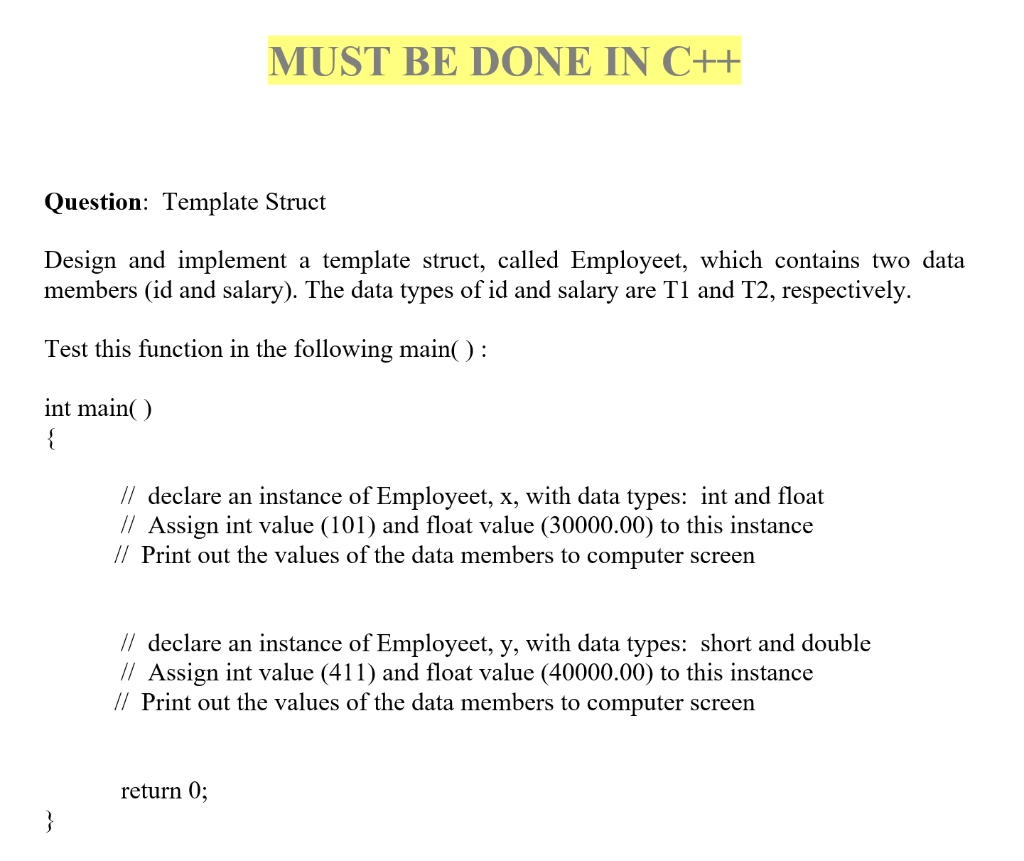
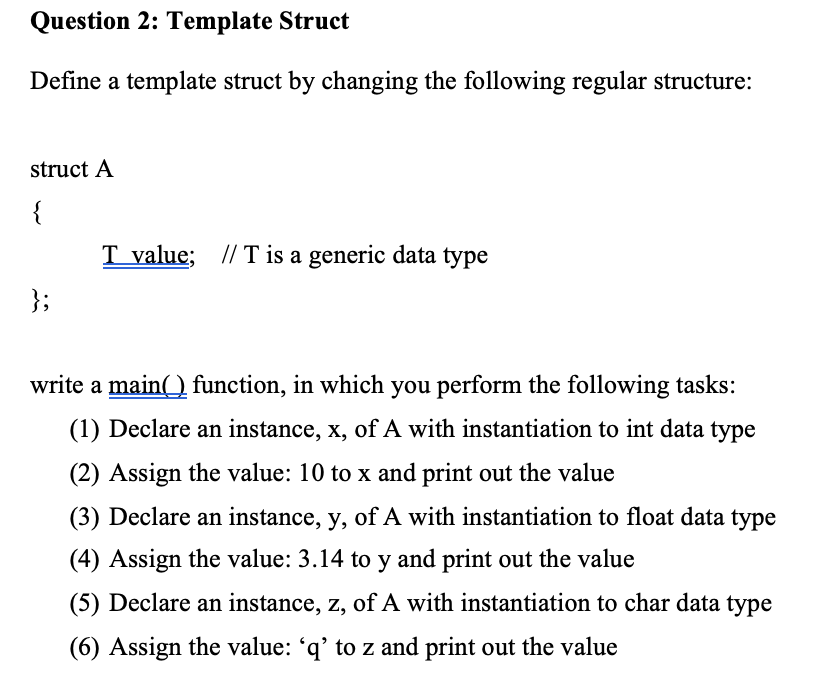
Solved MUST BE DONE IN C++ Question Template Struct Design
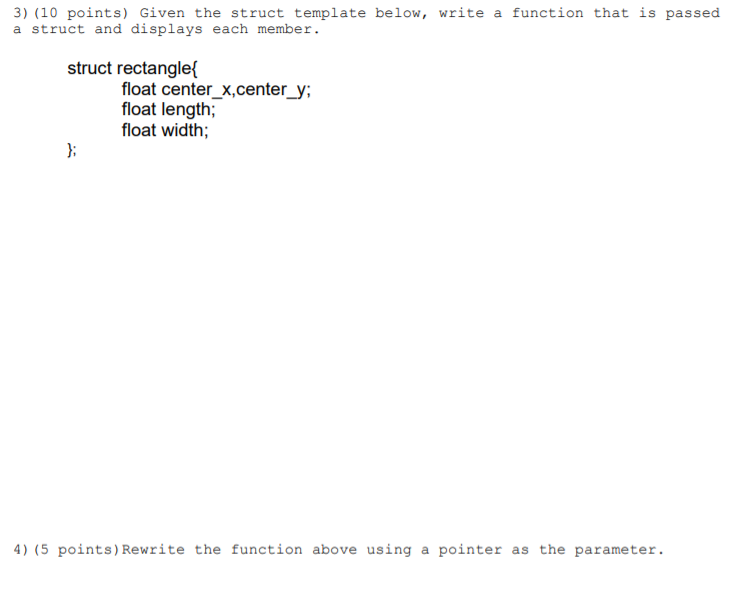
Solved 3) (10 points) Given the struct template below, write
DataStructTemplateFormatforBSIT1F PDF
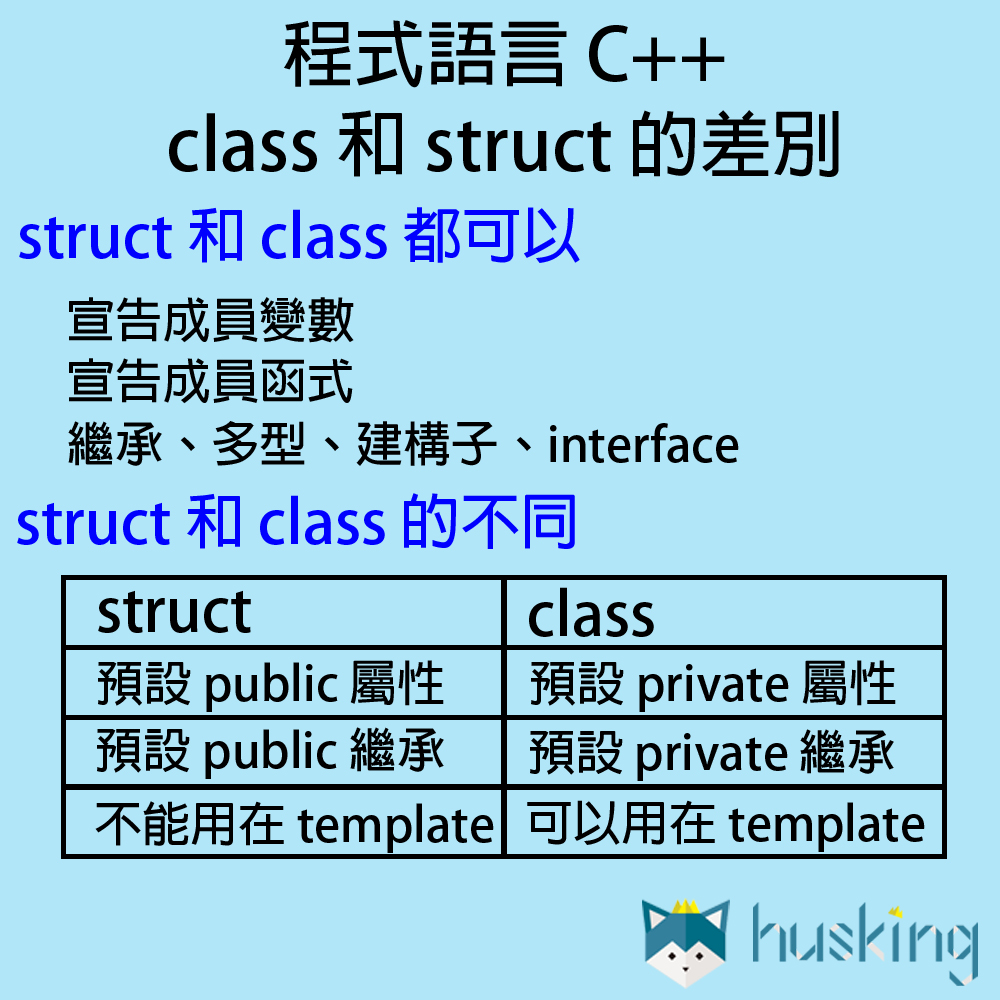
C++ Template Struct

Solved struct rectangle 1. Given the struct template below,
struct c++ PDF
Solved Question 2 Template Struct Define a template struct
Solved Question 2 Template Struct Define a template struct

I changed the order of the template struct in C++ and got an error
Our Code Involves A Pod (Plain Old Datastructure) Struct (It Is A Basic C++ Struct That Has Other Structs And Pod Variables In It That Needs To Get Initialized In The Beginning.).
225 Struct And Typedef Are Two Very Different Things.
The Second Is Of A Typedef Ed Anonymous Struct, And So We Use The Typedef Name.
Struct Foo { Int N;
Related Post: